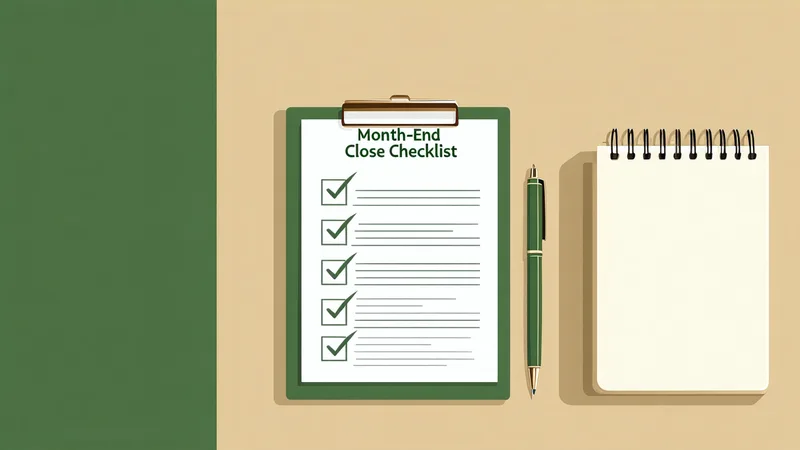
A step-by-step template covering pre-close prep, day-by-day reconciliations, accrual scheduling, JE review, flux analysis, and final binder package sign-off. Take it, use it, adapt it.
Read articlePractical writing for controllers, CFOs, and finance teams navigating month-end close. Templates, diagnostics, and analysis — written by people who have actually run the close, not by a content team.
A step-by-step template covering pre-close prep, day-by-day reconciliations, accrual scheduling, JE review, flux analysis, and final binder package sign-off. Take it, use it, adapt it.
Read article
Most closes run long because of two or three bottlenecks that repeat every period. This article shows you how to measure where your time actually goes — and a realistic roadmap from 10 days to 5.
Read article
Not every close task should be automated. This guide is for skeptical controllers — it leads with what automation can't do, then shows which tasks (accruals, recurring recs, status reporting) deliver the most return off spreadsheets.
Read article
Your ERP records transactions. It does not manage close workflow, track who owns which reconciliation, or tell you whether your accruals are on schedule. This article names the five gaps — and what the close management layer is actually supposed to do.
Read article
Not all accruals should be automated the same way. This article distinguishes simple recurring accruals (safe to fully automate) from estimation-based ones (flag, don't auto-post) — and shows how to build an accrual calendar with variance thresholds that actually work.
Read article
Calendar days to close is a blunt instrument. These five KPIs — cycle days, task completion rate by day, reconciliation error rate, accrual variance rate, and days-to-flux-commentary — give you a precise picture of where your close is healthy and where it isn't.
Read article